
Sheet metal fabrication is a core part of modern metal fabrication, used to produce precise, repeatable components for equipment, enclosures, frames, and assemblies across a wide range of industries. For OEMs and manufacturers, it’s less about one-off parts and more about consistency, reliability, and the ability to scale production without sacrificing quality.
At its core, sheet metal fabrication explained comes down to how flat metal is cut, formed, joined, and finished using controlled manufacturing processes. When those processes are standardized and supported by documented quality systems, manufacturers gain confidence that every part is built to specification, run after run. That level of consistency is why many organizations prioritize fabricators with established experience and ISO-aligned quality practices.
This guide breaks down how sheet metal fabrication works, the methods involved, the materials commonly used, and why process control and quality standards matter when choosing a fabrication partner.
Key Takeaways: Sheet Metal Fabrication at a Glance
- Sheet metal fabrication transforms flat metal into precise parts through cutting, forming, welding, and finishing
- It is essential for producing repeatable components like enclosures, frames, and assemblies across many industries
- Consistency and process control are critical for OEMs managing ongoing production and tight specifications
- Quality standards such as ISO 9001 help ensure traceability, accountability, and reliable outcomes
- Working with an experienced, process-driven partner like LMI Manufacturing supports long-term production success and dependable results
What Is Sheet Metal Fabrication?
Sheet metal fabrication is a metal fabrication process that transforms flat sheets of metal into finished parts or assemblies through a series of controlled manufacturing steps. These steps typically include cutting, forming, welding, and finishing, all performed according to customer-defined specifications.
Unlike heavier structural fabrication, sheet metal fabrication focuses on thinner materials that can be precisely shaped and assembled with a high level of repeatability. This makes it ideal for components that require consistent dimensions, clean edges, and dependable performance across short or long production runs.
For manufacturers, sheet metal fabrication isn’t just about shaping metal — it’s about executing each operation within a defined process. When fabrication is performed under standardized workflows and quality controls, it supports predictable outcomes, traceability, and consistent part quality from the first run to the last.
How the Sheet Metal Fabrication Process Works
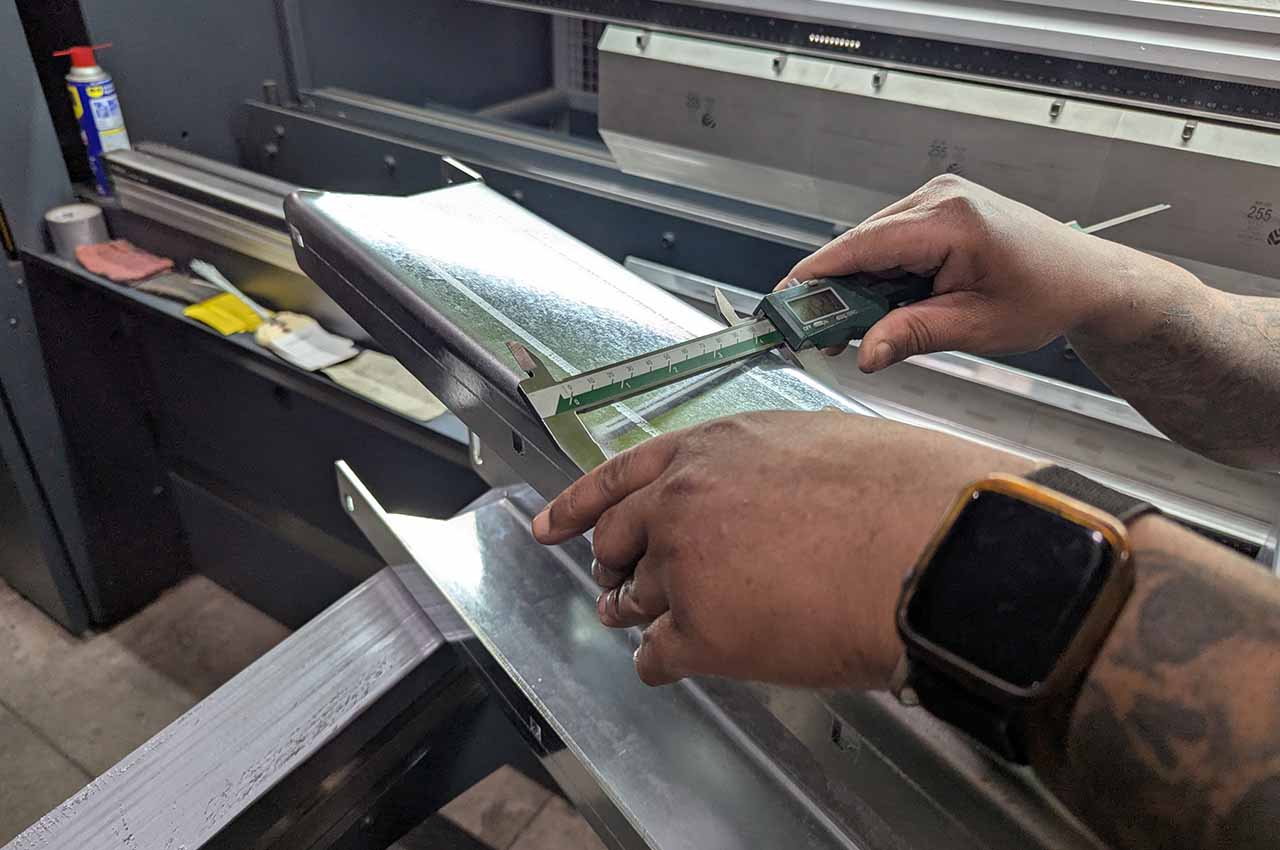
While every project is different, most sheet metal fabrication follows a similar production flow. Each step plays a role in ensuring parts are produced accurately, consistently, and in line with documented requirements.

Cutting
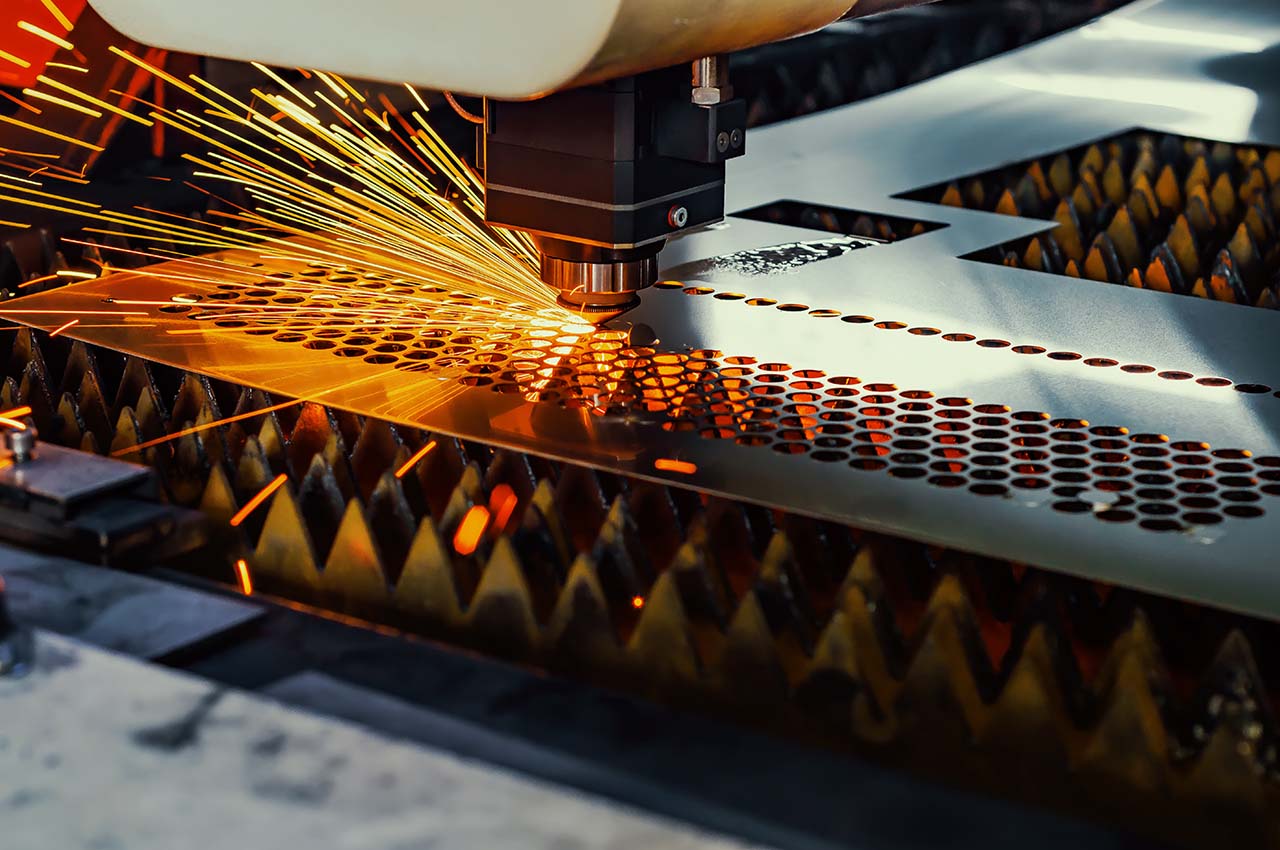
The fabrication process typically begins with cutting flat sheets of metal into precise shapes and profiles. Common cutting methods include laser cutting and turret punching, both of which are well suited for producing repeatable parts with tight dimensional control.
Modern cutting equipment allows manufacturers to maintain consistent edge quality and accuracy across production runs, which is critical for parts that move on to forming, welding, or assembly.
Forming & Bending
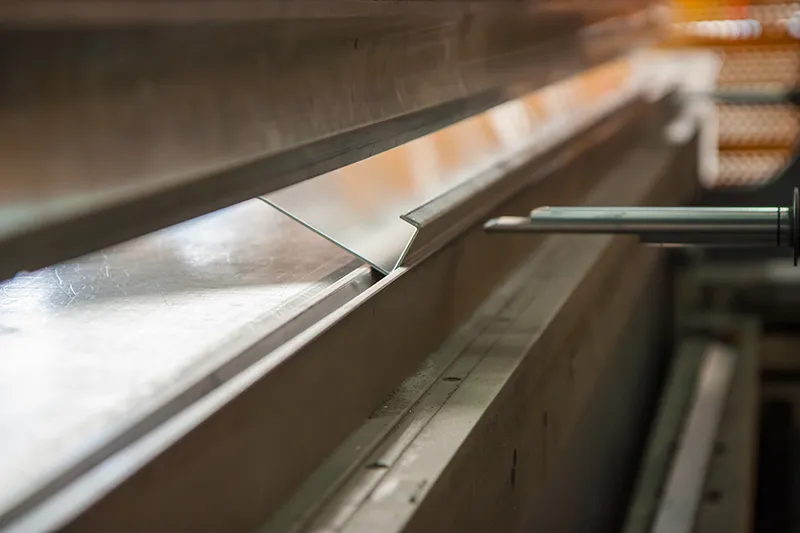
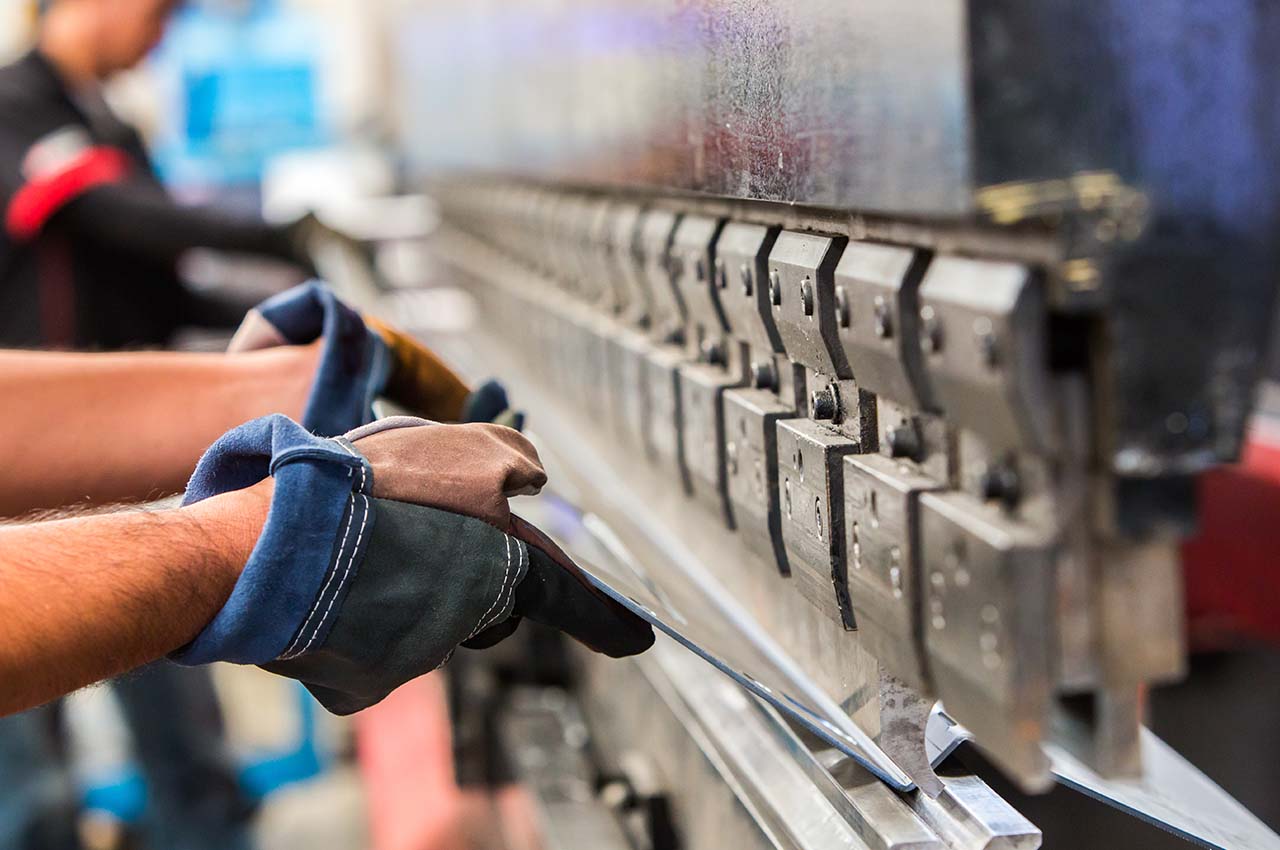
After cutting, parts are shaped using press brakes or other forming equipment. This step creates bends, angles, and contours that give the part its final geometry.
Because forming relies on repeatable tooling and controlled machine settings, consistency at this stage helps ensure parts fit together properly during downstream operations, especially in multi-part assemblies.
Welding & Joining
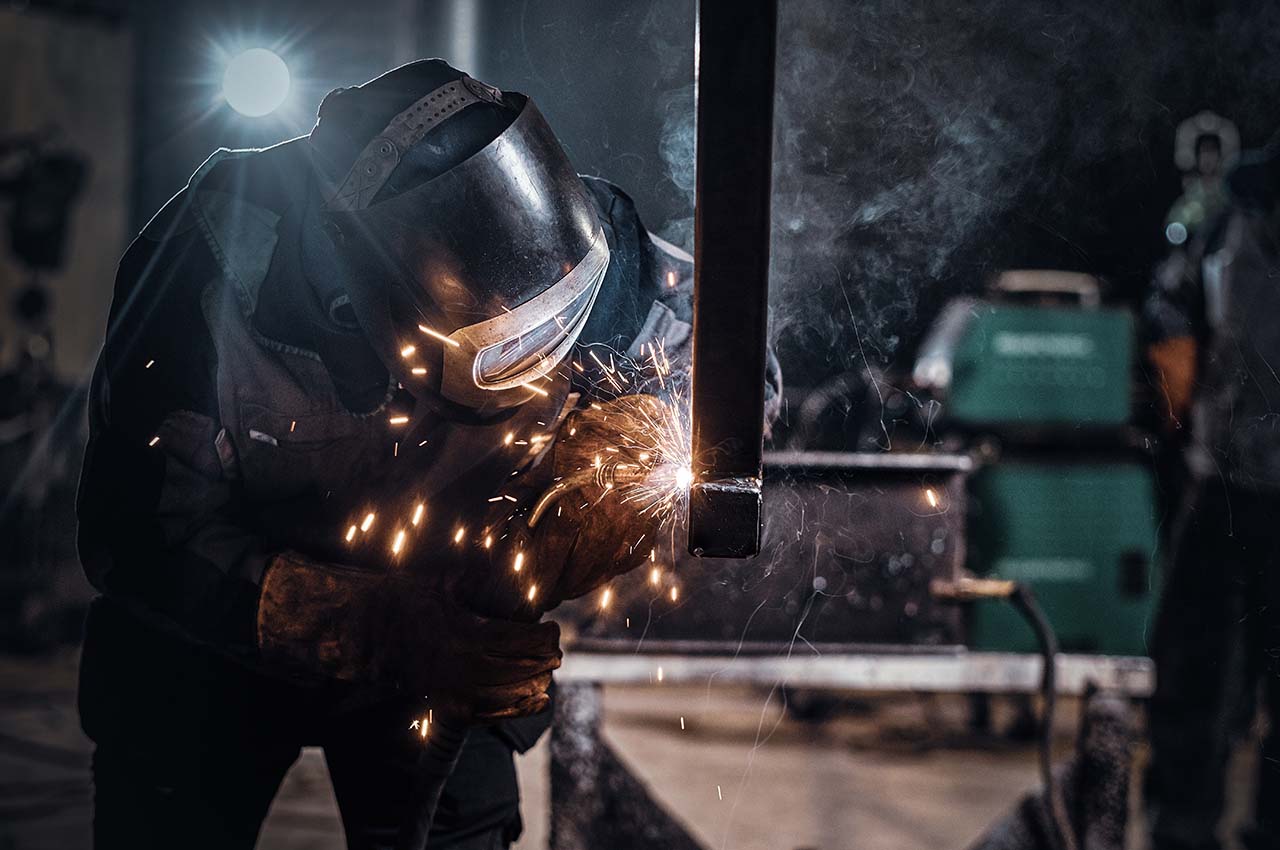
Welding is used to permanently join sheet metal components into assemblies or weldments. This may involve manual welding, robotic welding, or a combination of both, depending on the part and production requirements.
Controlled welding processes help maintain uniform weld quality across parts, supporting structural integrity and consistent appearance throughout a production run.
Finishing & Secondary Processing
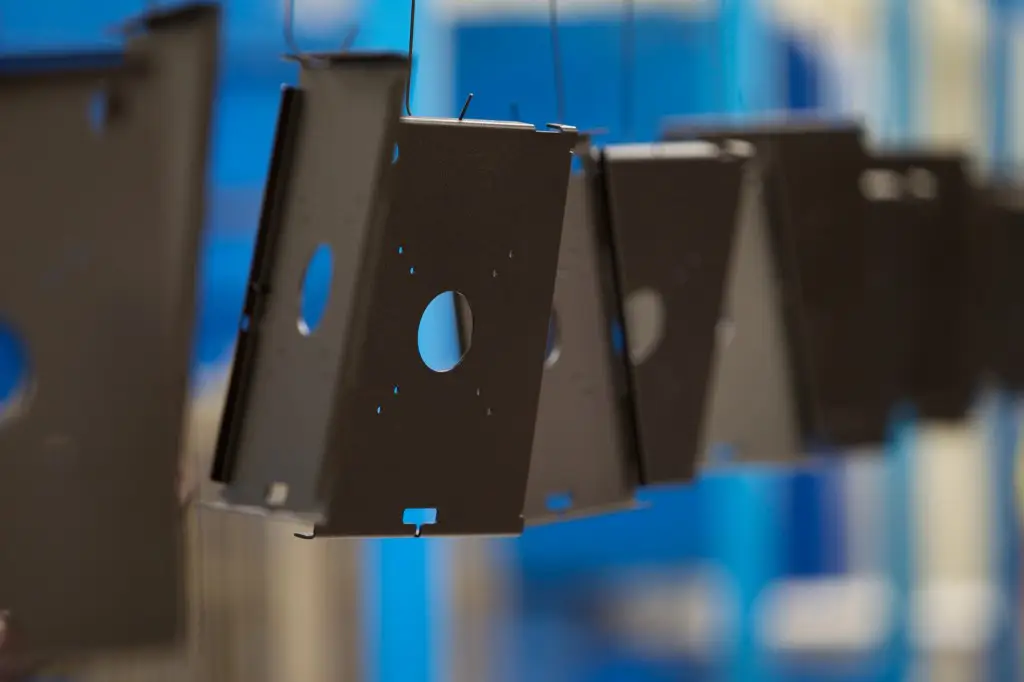
The final stage of sheet metal fabrication often includes finishing processes such as grinding, surface preparation, or coating. These steps improve appearance, durability, and readiness for end use.
In many manufacturing workflows, certain finishes (such as powder coating) may be completed through trusted external partners while remaining integrated into the overall production schedule.
Common Sheet Metal Fabrication Methods
Sheet metal fabrication uses several core methods to transform flat material into functional components and assemblies. Each method serves a specific purpose within the overall manufacturing process.
| Fabrication Method | Primary Purpose | Typical Use |
| Laser Cutting | High-precision cutting | Complex shapes, clean edges |
| Turret Punching | Holes and formed features | Repeatable part production |
| Press Break Forming | Bends and angles | Structural and enclosure parts |
| Welding | Permanent joining | Assemblies and weldments |

Materials Commonly Used in Sheet Metal Fabrication
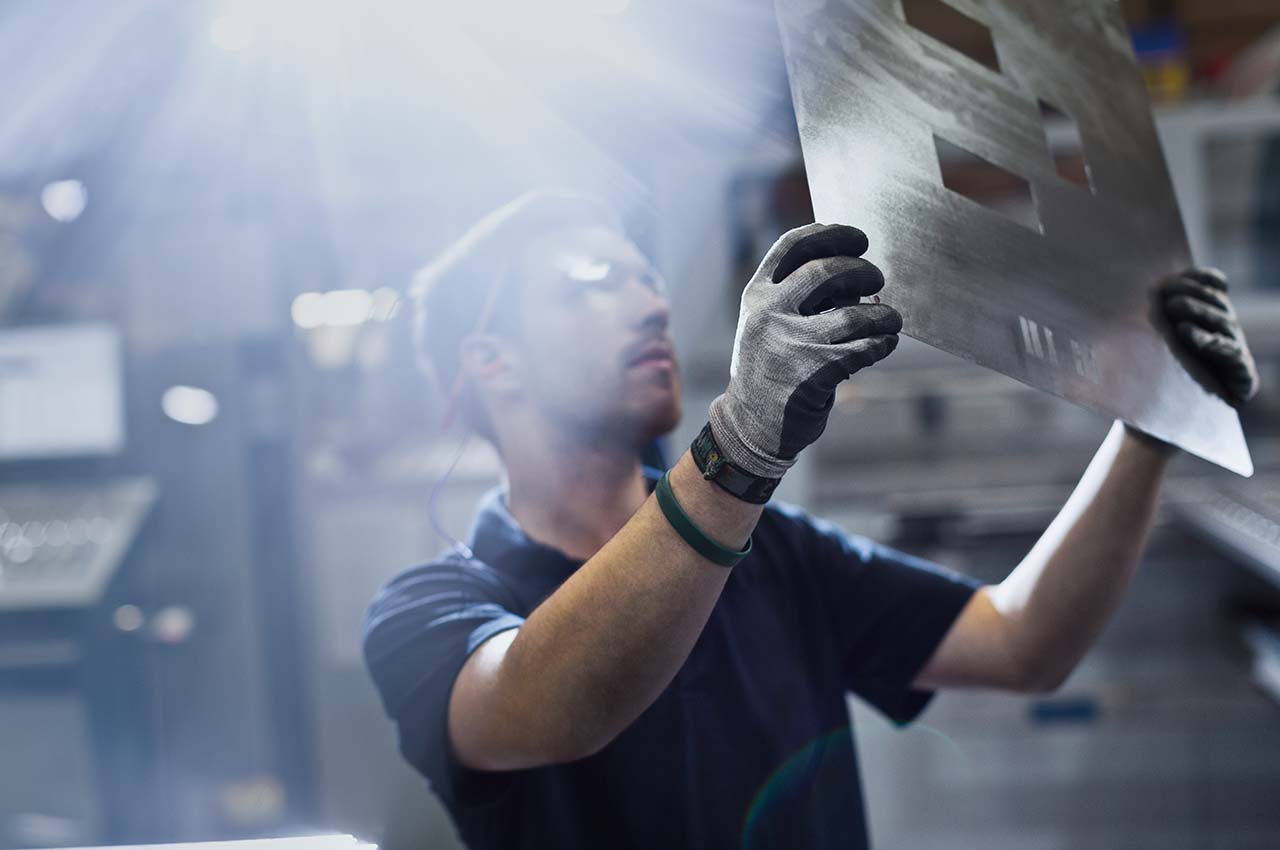
Sheet metal fabrication can be performed using a wide range of metals, depending on the application and production requirements. The materials below are among the most commonly used across industrial and manufacturing environments.
- Steel: Widely used for its strength, durability, and suitability for structural and industrial components.
- Stainless Steel: Valued for corrosion resistance and clean appearance, often used in environments where durability and surface finish matter.
- Aluminum: Lightweight and corrosion resistant, commonly used in applications where weight reduction is a priority.
- Specialty and Non-Standard Metals: Certain projects may require alternative materials to meet specific performance or environmental requirements.
Material selection is typically defined by the customer as part of the project specifications, with fabrication processes executed accordingly.
Applications of Sheet Metal Fabrication
Sheet metal fabrication is used across many industries to produce parts and assemblies that require precision, consistency, and repeatable quality. Its versatility makes it a foundational manufacturing process for both standalone components and larger systems.
Common applications include:
- Electrical Enclosures and Components: Cabinets, panels, and housings designed to protect sensitive equipment and wiring.
- Material Handling Equipment: Frames, brackets, guards, and structural components used in conveyors and handling systems.
- Industrial Machinery and Equipment: Fabricated parts and assemblies that support mechanical function and structural stability.
- Custom Assemblies and Weldments: Multi-part fabrications built to defined specifications for OEM production environments.
Because these applications often involve repeat production runs, sheet metal fabrication is well suited for manufacturers who prioritize consistency and long-term reliability.

Benefits of Sheet Metal Fabrication for OEMs & Manufacturers
For OEMs and manufacturers, sheet metal fabrication offers several advantages when parts need to be produced accurately and consistently over time. These benefits are rooted in process control, repeatability, and disciplined execution.
Key benefits include:
- Consistent Part Quality: Standardized fabrication processes help ensure parts are produced to the same specifications across every run.
- Repeatability at Scale: Sheet metal fabrication supports both short and long production runs without introducing unnecessary variability.
- Predictable Production Outcomes: Defined workflows and documented processes contribute to reliable timelines and uniform results.
- Compatibility with Assembly and Welding: Fabricated parts are well suited for integration into larger assemblies and weldments.
- Support for Quality-Controlled Manufacturing: When paired with formal quality systems, sheet metal fabrication enables traceability and accountability throughout production.
These benefits make sheet metal fabrication a dependable choice for manufacturers who value consistency and reliability in their supply chain.
Sheet Metal Fabrication vs. Other Metal Fabrication Methods
While sheet metal fabrication is a key part of metal fabrication, it differs from other fabrication approaches based on material thickness, processes, and end use.
| Sheet Metal Fabrication | Other Metal Fabrication |
| Uses thinner metal sheets | Uses thicker plate or structural material |
| Relies on cutting and forming | Often involves heavy machining or large weldments |
| Ideal for repeatable components | Common for heavy-duty structures |
| Supports precision assemblies | Focuses on strength and mass |
Understanding these differences helps manufacturers align fabrication methods with their production requirements and performance expectations.
Quality Standards in Sheet Metal Fabrication
Quality standards play a critical role in sheet metal fabrication, especially for manufacturers that rely on consistent, repeatable production. Rather than focusing on individual parts, quality systems are designed to control how work is performed across every stage of the fabrication process.
One of the most widely recognized standards in manufacturing is ISO 9001, which defines requirements for a formal quality management system. In a fabrication environment, this framework emphasizes documented procedures, clear responsibilities, inspection practices, and continuous adherence to defined processes.
For OEMs and procurement teams, ISO-aligned fabrication helps support:
- Process consistency from job to job
- Traceability throughout production
- Accountability within manufacturing workflows
- Confidence that parts are built to documented requirements
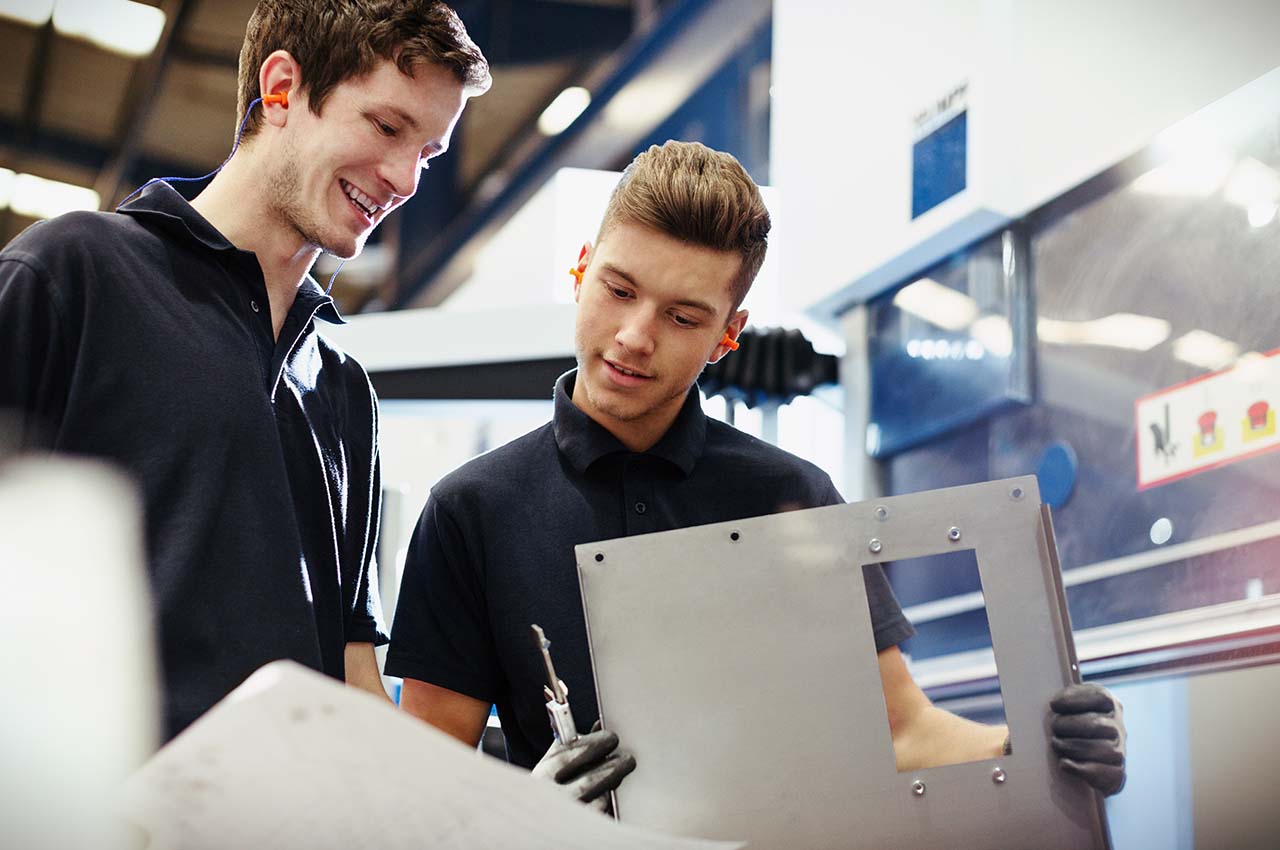
By maintaining structured quality controls, sheet metal fabrication operations can deliver dependable results that meet customer specifications across repeated production runs. This is exactly why LMI Manufacturing made achieving ISO 9001 certification a priority.
We align our processes with globally recognized quality standards, reinforcing our commitment to consistency, accountability, and long-term reliability. That gives OEM partners confidence that every project is executed with the same level of precision and control.
What to Consider Before Starting a Sheet Metal Fabrication Project
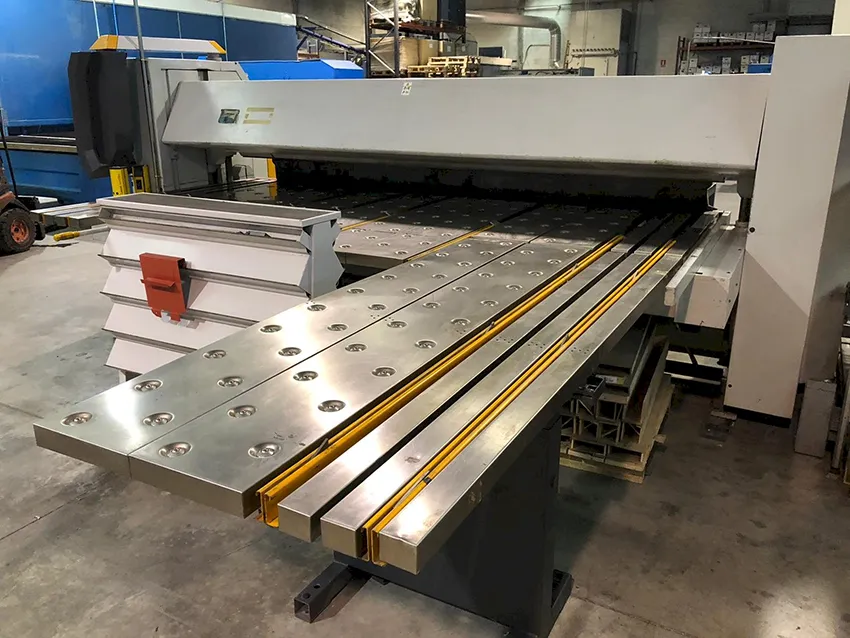
Before a sheet metal fabrication project begins, manufacturers typically define several key parameters to ensure production runs smoothly and meets expectations. Having this information clearly documented helps support efficient execution and consistent results.
Common considerations include:
- Material Specifications: The type, grade, and thickness of metal required for the part or assembly.
- Production Volume: Whether the project involves short runs, ongoing production, or repeat orders.
- Dimensional Requirements: Defined measurements and tolerances outlined in customer-provided documentation.
- Assembly and Welding Needs: Whether parts will be delivered as individual components or completed assemblies.
- Lead Time Expectations: Required timelines for fabrication and delivery.
Clearly defining these elements upfront supports controlled manufacturing workflows and helps reduce variability during production.
Why Experience Matters in Sheet Metal Fabrication
Experience plays a significant role in sheet metal fabrication, especially when projects involve repeat production, assemblies, or complex workflows. Over time, established fabrication teams develop the process discipline needed to execute work consistently and reliably.
Experienced fabricators bring value through:
- Familiarity with a wide range of fabrication equipment and processes
- Trained teams capable of maintaining consistent output
- Established workflows that support repeatability across production runs
- Quality systems that promote accountability and traceability
When fabrication is performed by teams with long-term experience and structured quality controls, manufacturers benefit from dependable execution and predictable results—run after run.
Frequently Asked Questions About Sheet Metal Fabrication
What is sheet metal fabrication used for?
Sheet metal fabrication is used to produce parts and assemblies such as enclosures, frames, brackets, panels, and weldments. These components are commonly found in industrial equipment, electrical systems, and manufacturing environments.
What are the main steps in sheet metal fabrication?
The process typically includes cutting, forming or bending, welding or joining, and finishing. Each step is performed according to defined specifications and documented production workflows.
What industries rely on sheet metal fabrication?
Sheet metal fabrication is widely used in industries such as manufacturing, agriculture, material handling, food processing, electrical equipment, and industrial machinery, where consistent, repeatable parts are required.
How is sheet metal fabrication different from metal stamping?
Sheet metal fabrication involves multiple operations such as cutting, forming, and welding, while metal stamping relies on dies to shape parts in high-volume production. Fabrication offers greater flexibility for assemblies and varied production runs.
Sheet Metal Fabrication Explained—In Plain Terms
At its simplest, sheet metal fabrication is the process of turning flat metal sheets into precise, functional parts through cutting, forming, welding, and finishing. For manufacturers, its value lies in repeatability, consistency, and the ability to produce components that meet defined specifications across ongoing production runs.
When supported by structured workflows and quality standards such as ISO 9001, sheet metal fabrication becomes a dependable manufacturing solution—one that emphasizes controlled execution, documented processes, and reliable outcomes from start to finish.
Need a Reliable Sheet Metal Fabrication Partner?
For OEMs and manufacturers, choosing the right fabrication partner often comes down to experience, process discipline, and quality systems. Working with a team that prioritizes consistency and clear communication can help support long-term production needs with confidence.
At LMI Manufacturing, we bring decades of experience in sheet metal fabrication, supported by in-house capabilities, structured workflows, and a commitment to ISO-aligned quality standards. From cutting and forming to welding and assembly, our team focuses on delivering repeatable, dependable results that meet your specifications—run after run.
If you’re evaluating fabrication partners or planning an upcoming project, our team is available to review your requirements and provide clear, straightforward guidance on next steps.
Ready to see the difference an ISO-certified fabrication partner can make?
Let’s make something better - together.