
If you’ve ever requested a metal fabrication quote and questioned how the pricing was determined, you’re not alone.
The reality is, fabrication costs aren’t one-size-fits-all. Two projects that look similar on the surface can end up with very different estimates depending on materials, processes, complexity, and how the work is actually executed.
At LMI, estimating isn’t about throwing out rough numbers—it’s about understanding the full scope of your project and building a quote that reflects how it will be manufactured in the real world.
In this guide, we’ll walk through how fabrication estimates actually work, what impacts your cost, and what you can do on your end to get faster, more accurate quotes.
What to Know Before Requesting a Fabrication Quote
- Fabrication costs depend on processes, materials, and project complexity—not just part size
- Simple, well-defined projects are faster and easier to estimate
- Complex assemblies require more coordination, which adds time to the quoting process
- The quality of your documentation directly impacts how quickly and accurately you get a quote
- Providing the right files and details upfront helps avoid delays and rework
What Goes Into a Fabrication Estimate?
One of the biggest misconceptions about fabrication pricing is that it’s based on a single factor—like part size or material.
In reality, every estimate is built around the specific processes required to manufacture your part or assembly. At LMI, we look at each project through the lens of our core work centers, because that’s what ultimately drives time, cost, and complexity.
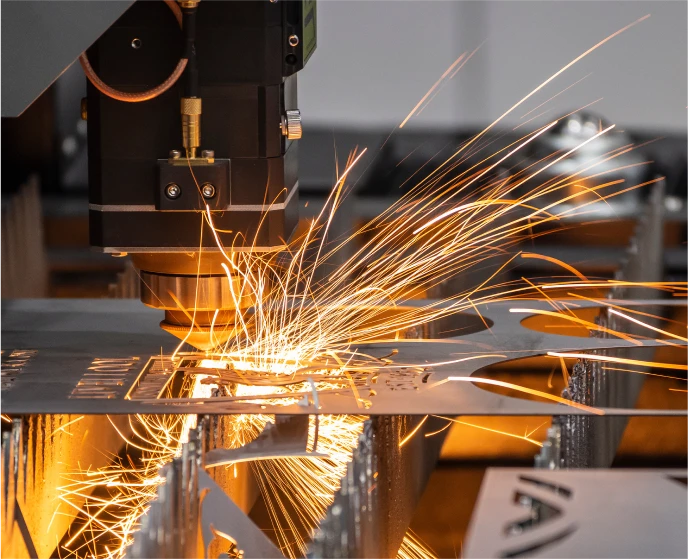
Laser Cutting
This is typically where the process starts. Raw sheet metal is cut to shape using high-powered lasers.
Laser cutting sets the foundation for the entire project. Factors like material type, thickness, and cut complexity all play a role in how long this step takes and how much it costs.
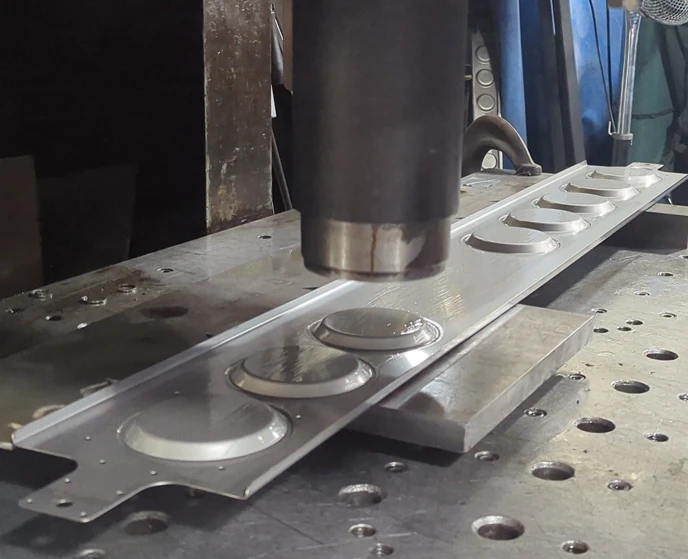
Forming (Press Brakes & Panel Benders)
Once parts are cut, they often need to be formed into their final shape.
Forming involves bending the material using press brakes or panel benders. The number of bends, the precision required, and the tooling involved all influence the estimate. More complex geometries require more setup and time.
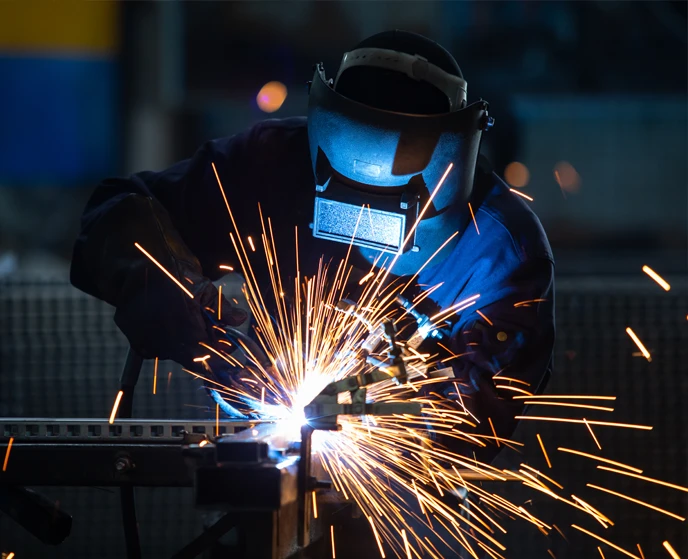
Welding (Manual & Robotic)
Welding is where individual components come together into a finished part or assembly—and it’s often one of the most labor-intensive steps.
The complexity of the weldment, the number of components, and the required weld quality all impact cost. For repeatable work, robotic welding can improve consistency and efficiency, while more intricate projects rely on skilled manual welding.
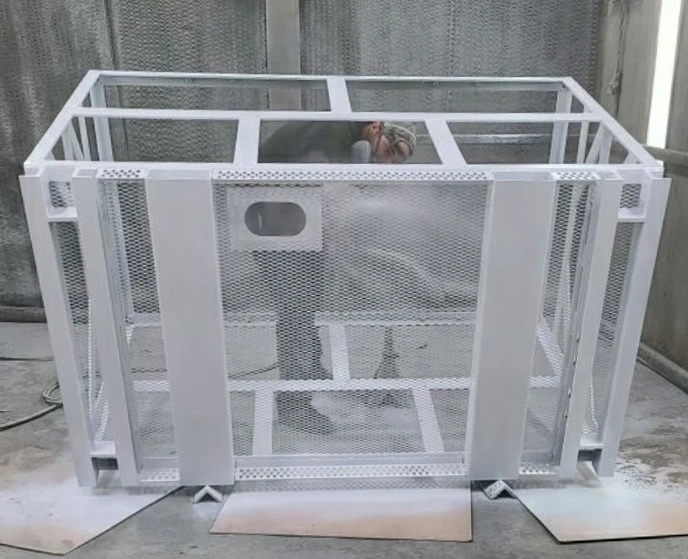
Finishing
Finishing can include processes like powder coating, wet painting, or other surface treatments.
Some finishing processes are handled in-house, while others may involve outside vendors. When external services are required, they can add both time and coordination to the estimating process.
Assembly and Packaging
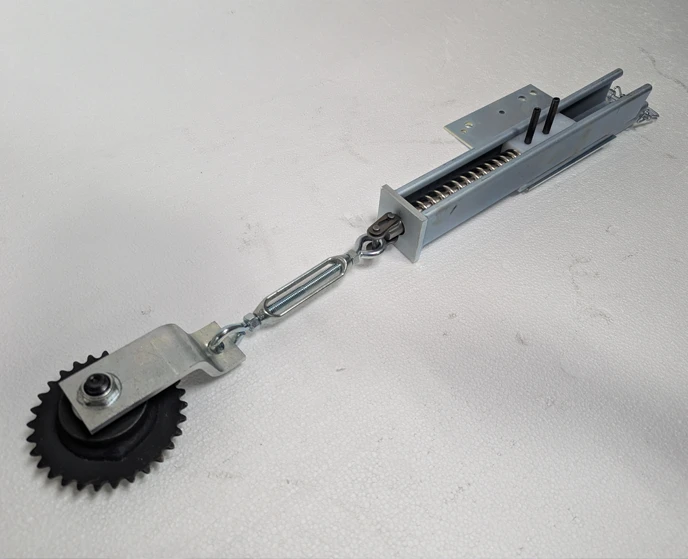
One of the final steps in the fabrication process is assembling your parts (if your project requires it) and preparing them for shipment.
At LMI, assembly is handled with the same attention to detail as the fabrication itself. Whether your project involves simple part grouping or more complex assemblies, the goal is to ensure everything arrives ready for use on your end.
Packaging is just as important. LMI will typically ask about any specific packaging requirements for your project upfront. If you have documentation that outlines your standards, the team will follow those requirements to ensure consistency.
If packaging needs haven’t been defined, LMI can work with you to determine the best approach based on your product, handling needs, and shipping conditions.
The result is a finished product that’s not only built correctly, but packaged in a way that protects it and fits seamlessly into your process.
How These Processes Impact Your Cost
Each of these work centers adds a layer to your project. A simple laser-cut part is relatively straightforward to estimate. But when you combine cutting, forming, welding, and finishing—especially across multiple components—the scope changes quickly.
That’s why two parts that look similar at a glance can have very different costs. The difference isn’t just the part itself—it’s everything that goes into making it.
Why Some Fabrication Quotes Come Back Faster Than Others
Not all fabrication quotes follow the same timeline—and it usually comes down to how straightforward the project is to evaluate.
Simpler Projects Move Faster
When a project involves a small number of parts and stays within core processes like laser cutting, forming, and welding, it’s much easier to estimate. These jobs rely on internally controlled work centers, which means the estimating team can review the files, apply known costs, and build an accurate quote without waiting on outside input.
Clear, complete documentation also plays a big role here. When everything is well-defined from the start, the process moves efficiently from review to estimate.
Complex Assemblies Take More Time
On the other hand, larger or more complex projects require a deeper level of evaluation. A single assembly might include dozens or even hundreds of individual components, each with its own material, process, and requirements.
In these cases, the estimating process often involves:
- Reviewing a full bill of materials (BOM)
- Coordinating multiple fabrication steps
- Requesting pricing for outsourced services like finishing or specialty treatments
- Validating material availability and specifications
Because of these added layers, the timeline naturally extends. More moving parts means more coordination—and ultimately, a more thorough quote.
It’s Not Just Complexity—It’s Control
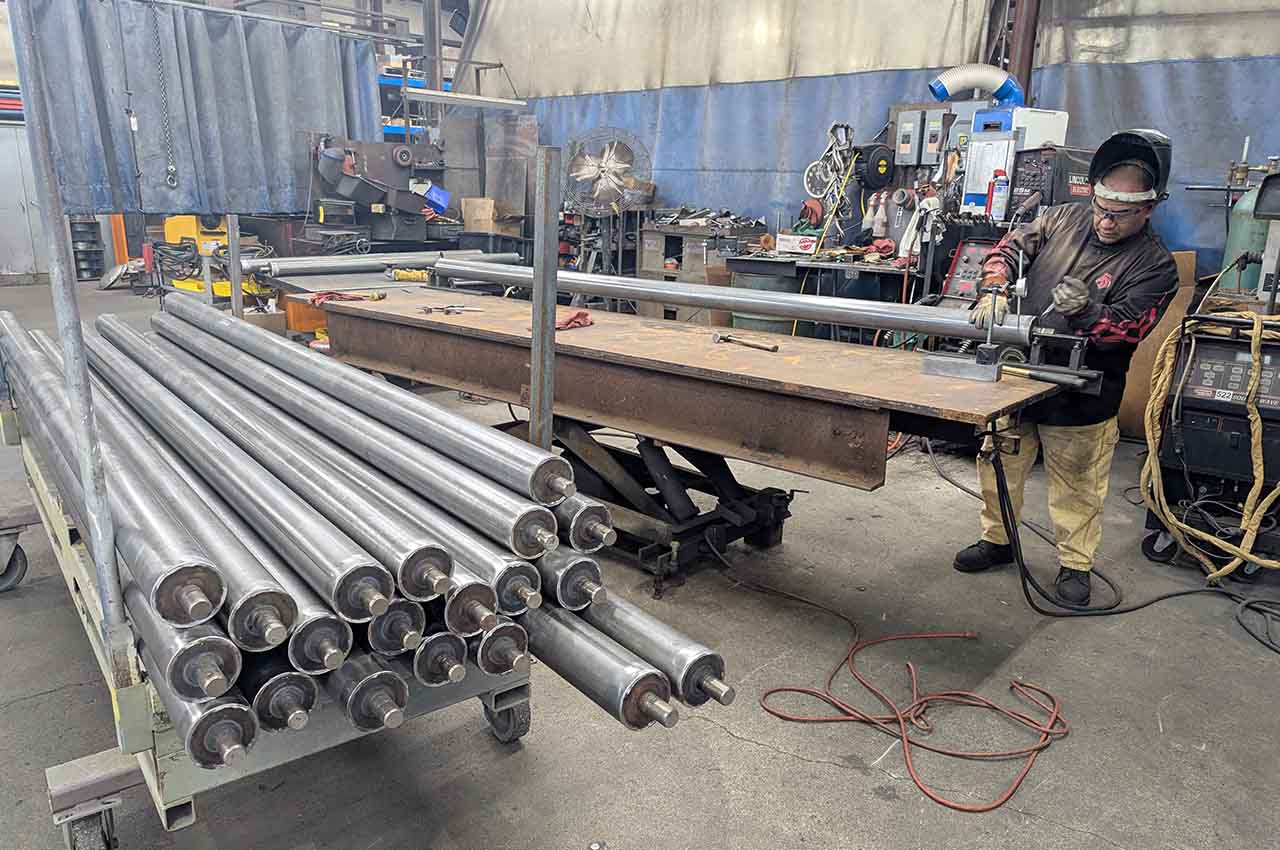
One of the biggest factors is whether the work is handled in-house or requires outside vendors. Internally controlled processes are easier to estimate because the data, pricing, and timelines are already known. When external services are involved, the estimating team needs to gather additional quotes and align timelines before providing a final number.
The takeaway: faster quotes usually come from well-defined, straightforward projects, while complex assemblies require more time to get right.
How Better Documentation Leads to Faster, More Accurate Quotes
If there’s one thing that consistently speeds up the quoting process, it’s this: the quality of the information you provide upfront.
The more complete and usable your documentation is, the easier it is for an estimating team to understand your project and build an accurate quote without going back and forth.
What to Send for a Fabrication Quote
At a minimum, most fabricators can work with basic drawings. But if you want a faster and more precise estimate, it helps to provide:
- STEP files or SolidWorks files (preferred)
- DXF files for flat patterns
- A complete set of drawings (if available)
- A ZIP file that includes all related documents and models
These types of files allow the estimating team to work directly with your design, rather than interpreting it manually.
Why File Format Matters
Not all files are created equal when it comes to quoting.
PDFs, while common, often require manual entry. That means someone has to interpret dimensions, identify missing details, and piece together how the part will be manufactured. It works—but it slows things down and increases the chances of follow-up questions.
Working files like STEP, DXF, or SolidWorks models are much more efficient. They provide a clear, complete view of the part, allowing estimators to move quickly and confidently through the quoting process.
If for some reason your working files do not match your PDF provided, we allows follow critical dimensions on PDFs rather than solid models. This is why it is best practice to provide PDFs along with working files.
The Details That Make a Difference
Beyond the file format, the level of detail you provide can have a direct impact on both speed and accuracy.
Helpful details include:
- Finishing requirements (powder coating, plating, etc.)
- Deburring or edge requirements
- Weld specifications and quality expectations
- Any required tolerances or critical dimensions
- Quality control or inspection requirements
When these details are included upfront, it reduces guesswork and helps ensure the quote you receive reflects the true scope of the project.
Why Incomplete Information Slows Things Down
Incomplete information doesn’t just slow down the quoting process—it can also lead to revisions later.
A quote built on partial information may need to be updated once missing details are clarified. Providing everything upfront helps avoid rework, shortens the quoting cycle, and gets your project moving faster.
In short, better inputs lead to better outputs.
What Impacts Turnaround Time for Fabrication Quotes
Turnaround time for a fabrication quote depends on a few key factors: project complexity, documentation quality, and how much of the work can be handled in-house.
At a high level, the more straightforward and well-defined a project is, the faster it can move through the quoting process. When multiple processes, vendors, or unknowns are involved, it naturally takes longer to build an accurate estimate.
The Role of Modern Quoting Systems
Quoting has changed significantly in recent years.
With modern quoting software, estimating teams can analyze parts, review files, and build quotes much more efficiently than traditional manual methods. Instead of working through drawings line by line, they can pull in data directly from working files and apply standardized processes.
For customers, that means:
- Cleaner, more detailed quotes
- Fewer back-and-forth emails
- Faster turnaround from submission to estimate
It also makes it easier to keep everything organized. Once a project is in the system, it can be revisited, updated, or re-quoted without starting from scratch.
Why Some Quotes Still Take Longer
Even with better tools, not every quote can be turned around quickly.
Projects that involve large assemblies, unique materials, or outsourced processes still require coordination. If pricing needs to be gathered from outside vendors or materials need to be sourced, those steps add time to the process.
That’s not inefficiency—it’s part of building an accurate quote that reflects the real scope of the work.
Setting the Right Expectations
A good estimating process balances speed with accuracy.
Fast turnaround is important, but it shouldn’t come at the expense of missing details or underestimating the work involved. The goal is to provide a quote that’s both timely and reliable, so you can move forward with confidence.
Why Re-Quoting Is Faster the Second Time
If you’ve worked with a fabricator before, you may have noticed that repeat quotes tend to move much faster—and there’s a reason for that.
Once a project has been quoted, all of the key information is already captured. The part files, bill of materials, processes, and prior assumptions are stored and organized, so the estimating team doesn’t have to start from scratch.
In most cases, re-quoting is simply a matter of updating material costs, confirming any changes, and refreshing the pricing based on current conditions.
That means less back-and-forth, fewer unknowns, and a much quicker turnaround compared to the initial quote.
If you anticipate ongoing or repeat work, having that baseline established upfront can save significant time down the line.
How Long Fabrication Quotes Stay Valid
Fabrication quotes are based on current material and production costs, which can change over time.
Because of that, every quote has a defined validity period. It’s important to review that timeframe and move forward within it whenever possible.
If a quote expires, it may need to be updated to reflect current material pricing and production conditions. In some cases, that can result in changes to the original estimate.
To avoid delays or unexpected adjustments, it’s always a good idea to confirm how long your quote is valid and plan accordingly.
What This Looks Like When You Work With LMI
At LMI, everything we’ve covered here is built into how we approach quoting from day one.
Our estimating process is structured around the same core work centers—laser cutting, forming, welding, and finishing—so every quote reflects how your parts will actually move through production. We prioritize internally controlled processes whenever possible, which helps streamline both quoting and lead times.
We’ve also invested in modern quoting systems that allow us to work directly from your files, organize project data, and respond more efficiently—especially when documentation is complete and well-defined.

For more complex assemblies, we take the time to coordinate materials, processes, and any required outside services so the quote you receive is accurate and reliable.
Just as important, we work closely with our customers throughout the process—answering questions, clarifying details, and helping identify ways to improve manufacturability when needed.
At the end of the day, our goal is simple: provide clear, realistic estimates and be a reliable partner you can count on as your projects evolve.
Fabrication Estimating FAQs
What information do I need to get a fabrication quote?
The more complete your information, the better. Ideally, you should provide working files (like STEP or SolidWorks), drawings, material specifications, and any notes on finishing, tolerances, or weld requirements. In addition to drawings, we need to understand your quantities and anticipated volumes (i.e. is this a one-time project or a repeat) as the answers to these questions can offer you better pricing for volume business.
How long can you lock in pricing for commodities?
Generally pricing can be locked in for 4-6 months depending on how much material your project requires. Our suppliers generally allow us to purchase and hold material for 4-6 months. When you lock in pricing, you will always pay above spot market price, but what you are receiving is certainty in the future. LMI does not pocket the additional commodity costs. These are charged directly by the steel supplier for holding the material.
How long does it take to get a fabrication quote?
It depends on the scope of the project. Simple, well-defined parts can be quoted quickly, while larger assemblies that involve multiple processes or vendors take more time to evaluate.
Can I get a quote from just a PDF?
Yes—but it may take longer. PDFs often require manual interpretation, while working files allow for faster and more accurate quoting.
Why did my quote change?
Quotes are based on current material and production costs. If there are delays or changes to the project scope, pricing may need to be updated to reflect current conditions.
Bringing It All Together
Estimating fabrication costs isn’t about guesswork—it’s about understanding how your project will be built.
The more clearly defined your parts, processes, and requirements are, the easier it is to generate a fast, accurate quote. And when you work with a team that understands both the technical and practical side of fabrication, the process becomes much more predictable.
If you’re planning a project and want to make the quoting process as smooth as possible, start by focusing on the details. It makes a bigger difference than most people expect.
Ready to see the difference an ISO-certified fabrication partner can make?
Let’s make something better - together.