
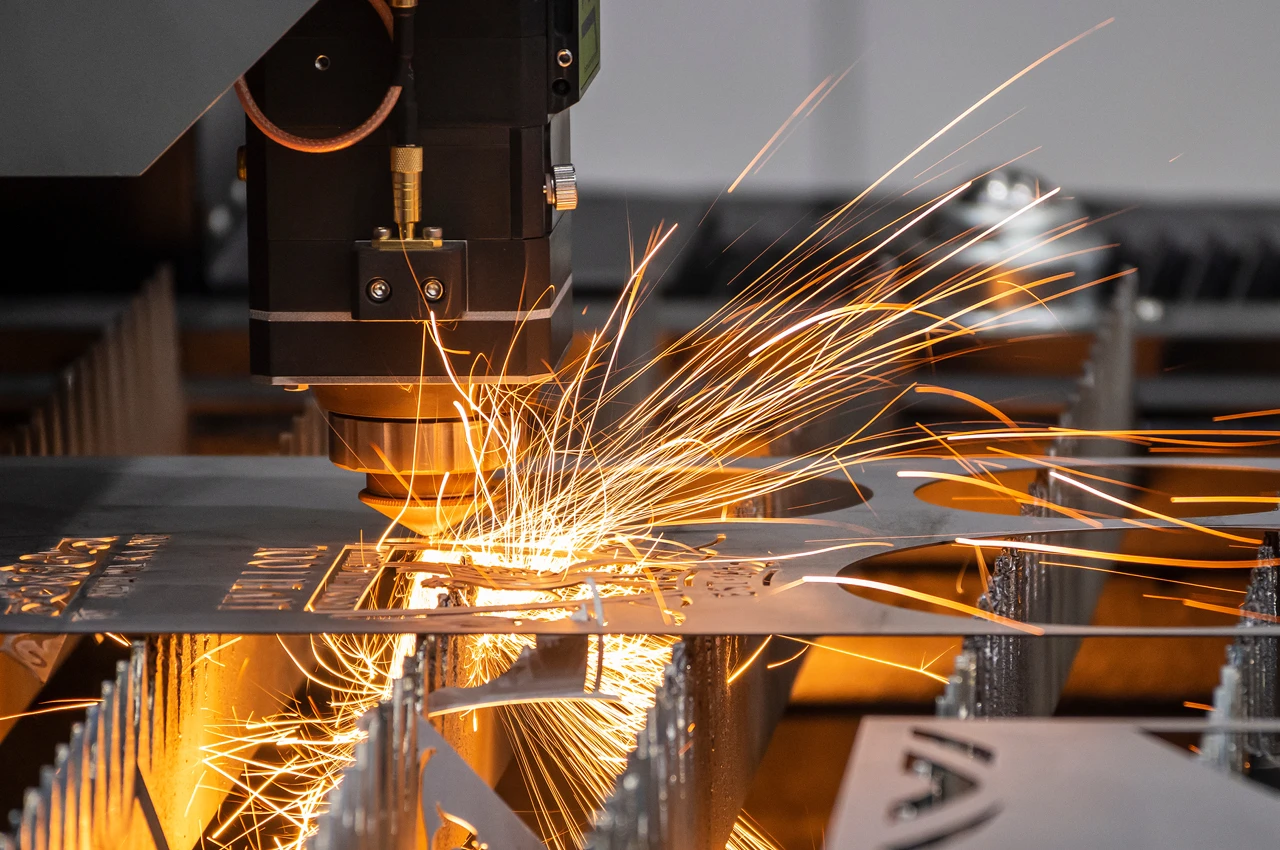
During the first week of November 2026, we will bring our new AMADA ORSUS fiber laser into production. Equipped with CL automation and a CL load and unload system, the machine will replace our existing laser and increase our current laser cutting capacity fourfold.
For our manufacturing partners, this upgrade means more capacity for repeat production, program ramp-ups, and projects that continue through forming, welding, machining, and assembly.
A Major Investment in LMI’s Laser Cutting Services
Laser cutting is often one of the first steps in a larger sheet metal fabrication process. When production requirements increase, cutting capacity must be ready to keep pace with the forming, welding, machining, and assembly work that follows.
The investment is especially meaningful for OEMs that need more than individual laser-cut parts. LMI works with partners whose projects may continue through multiple processes under one roof. Expanding capacity at the front of that workflow helps us build a stronger foundation for the stages that follow.
This is not simply an equipment replacement. It is an investment in the production capacity LMI needs to remain a dependable long-term partner.
A Purposeful Upgrade for Greater Laser Cutting Capacity
The AMADA ORSUS is designed for high-speed, precision fiber laser cutting. Its advanced cutting, monitoring, and control technologies support reliable production across a varied mix of sheet metal requirements.
For LMI, however, the most important advantage is the additional production capacity the machine provides. The upgrade will give the team more room to support repeat orders, changing quantities, and manufacturing programs preparing to scale.
Our ORSUS will be installed with CL automation and a CL load/unload system, providing automated material handling from the start. The system also gives us room to expand as our partners’ production needs grow. As demand increases, we can add an automation tower to provide additional material storage and support continued production growth.
The equipment itself is only part of that value. LMI’s experienced team will integrate the new laser into a connected fabrication process that can continue through forming, welding, machining, finishing coordination, and assembly.
| ORSUS capability | How It Supports Production |
| Automatic beam adjustment | Supports flexible processing across a varied mix of cutting requirements |
| In-process monitoring | Helps detect certain cutting and piercing issues during production |
| Operator-focused controls | Supports efficient machine operation and access to maintenance information |
| Automation compatibility | Automates material handling now with the option to add a tower as demand increases |
The specific results for any project will still depend on its material, thickness, geometry, quantity, tolerances, and other production requirements. The value of the equipment is not one feature alone. It is the combination of cutting technology and the experienced team responsible for planning, operating, and integrating it into the full fabrication process.
What Four Times the Laser Cutting Capacity Means for Our Partners
Quadrupling LMI's current laser cutting capacity will give our team more production bandwidth. That capacity can create practical advantages for partners with repeat parts, multiple-component projects, or programs preparing to scale.
More Room for Repeat Production
Recurring mid-volume and high-volume programs require dependable scheduling. Additional laser cutting capacity will give LMI more room to plan repeat runs while continuing to support the range of projects moving through our facility.
Stronger Support for Production Ramp-Ups
Moving from an initial run into ongoing production takes careful preparation. Quantities, materials, drawings, quality requirements, secondary processes, packaging, and delivery expectations all need to work together. Expanded cutting capacity gives LMI a stronger starting point for supporting partners as their production requirements grow.
Greater Scheduling Flexibility
Manufacturing demand does not always arrive in a perfectly predictable pattern. Order quantities change, schedules move, and additional components may be added to an established program. More capacity gives our team greater flexibility when planning around those changes.
Better Alignment Across Fabrication Stages
Laser cutting is only one part of many LMI projects. When a part also requires forming, welding, machining, finishing coordination, or assembly, every stage must be planned as part of the same production flow. Increasing capacity at the cutting stage helps LMI coordinate that broader workflow for partners with multi-process projects.
Additional capacity does not mean that every part follows the same schedule. Material availability, part complexity, inspection requirements, quantities, and downstream processes will continue to influence production planning. Our team reviews those requirements before work begins so expectations are clear from the start.
More Capacity Across a Connected Fabrication Process
LMI has spent more than 60 years helping manufacturers turn specifications and production drawings into repeatable fabricated parts and assemblies. Our advantage is not limited to one machine or process. It comes from connecting multiple capabilities within one manufacturing relationship.
Depending on the project, laser-cut components can move into:
- Sheet metal forming with press brakes and panel-bending equipment
- Manual or robotic welding
- CNC machining
- Grinding and other finishing preparation
- Assembly and subassembly work
- Finishing coordinated through trusted local partners
Keeping these steps connected can simplify communication and give LMI greater visibility across the project. Partners have one team helping coordinate the work from cut components through completed parts or assemblies.
That collaborative approach remains central as we expand. The ORSUS investment gives our experienced team more capacity to work with, while our planning, communication, and commitment to each partner continue to guide how that capacity is used.
Preparing Now for November and Future Production Needs
The AMADA is scheduled to be installed at the end of October and ready for production during the first week of November 2026.
If you are planning a repeat sheet metal run, increasing production quantities, sourcing a multi-process assembly, or preparing for a future ramp-up, now is a good time to start the conversation. Sharing your drawings, materials, expected quantities, quality requirements, secondary processes, and delivery needs early gives our team the information needed to evaluate the right production approach.
Explore LMI’s laser cutting services or contact our team to discuss how your next program could fit within our expanding capabilities.