
Understanding the difference between welding and fabrication is essential if you’re sourcing metal parts, assemblies, or full production solutions. While these terms are often used interchangeably in the manufacturing industry, they refer to two distinct processes that play different roles in creating finished metal products.
Welding is a specific technique used to join metal parts together using heat, pressure, or both. Fabrication, on the other hand, is a broader process that includes cutting, bending, forming, and assembling metal components—often incorporating welding as one step within a larger workflow.
Knowing how these processes differ helps you make better decisions when choosing a partner, optimizing designs, and managing production costs. In this guide, we break down welding vs fabrication in simple terms so you can understand how each process fits into your project.
Key Takeaways: Differences Between Welding and Fabrication
- Welding is a joining process, while fabrication is a complete manufacturing process
- Welding focuses on fusing metal parts together using heat or pressure
- Fabrication includes cutting, bending, forming, machining, and assembly
- Welding is one step within the fabrication process, not the entire process
- Fabrication requires multiple tools, techniques, and skill sets, while welding is more specialized
What Is Welding?
Welding is a metalworking process used to join two or more pieces of metal by applying heat, pressure, or both. The goal is to create a strong, permanent bond that allows separate parts to function as a single component.
In most welding processes, the base metal is melted and fused together, often with the help of a filler material. Once cooled, the joint becomes as strong as or stronger than the surrounding material when done correctly.
Welding plays a critical role across industries because it provides the structural integrity needed for everything from small components to large, complex assemblies.
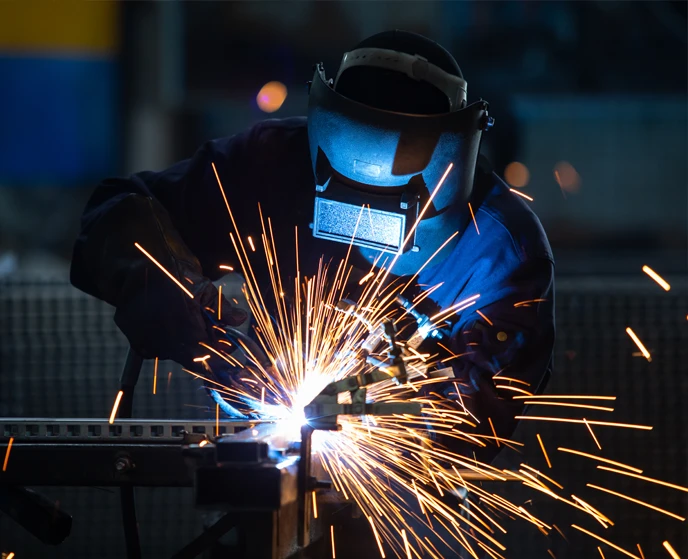
Common Welding Processes
There are several types of welding processes, each suited for different materials, thicknesses, and applications:
- MIG Welding (Metal Inert Gas): A fast and efficient process commonly used in high-volume production
- TIG Welding (Tungsten Inert Gas): Offers high precision and clean welds, ideal for thinner materials or detailed work
- Arc Welding: Uses an electric arc to generate heat and fuse metals together
- Gas Welding: Uses a flame fueled by gas to melt and join metal parts
Each welding process requires specific tools, equipment, and expertise, which is why experienced welders are essential to achieving consistent, high-quality results.
When Is Welding Used?
Welding is used whenever metal parts need to be permanently joined. Common applications include:
- Structural components that require strength and durability
- Equipment frames and supports
- Complex weldments made up of multiple metal parts
- Repairing or reinforcing existing metal components
Because welding directly impacts the strength and reliability of a finished product, the quality of the welding process—and the skill of the welder—makes a significant difference.
What Is Metal Fabrication?
Metal fabrication is a broad manufacturing process that involves transforming raw metal materials into finished parts or assemblies. Unlike welding, which focuses only on joining metal, fabrication includes multiple steps and processes that shape, modify, and assemble metal into usable products.
Fabrication typically starts with raw materials such as steel sheets, tubes, or structural components. From there, fabricators use a combination of techniques to cut, bend, form, machine, and assemble those materials into the final product.
Because of this, metal fabrication is often considered the complete production process, with welding serving as one important step within it.
Key Steps in the Fabrication Process
The fabrication process can vary depending on the project, but it generally includes several core stages:
- Cutting: Using tools like laser cutters or saws to shape raw metal
- Bending and forming: Shaping metal using press brakes or rolling equipment
- Machining: Refining parts to precise dimensions
- Assembly: Bringing multiple components together into a final structure
- Welding: Joining parts permanently when needed
- Finishing: Grinding, coating, or treating the surface for durability and appearance
What Makes Fabrication Different from Welding?
The key difference is scope.
- Fabrication covers the entire process of creating a part or product
- Welding is just one technique used within that process
Fabrication also involves a wider range of materials, tools, and production methods. It requires coordination across multiple stages to ensure that parts fit together correctly and meet performance requirements.

Where Fabrication Is Used
Metal fabrication is used across a wide range of industries where custom parts or assemblies are required, including:
- Electrical and industrial equipment
- Material handling systems
- Structural components and frameworks
- Custom machinery and production equipment
In many cases, fabrication projects involve complex assemblies made up of multiple parts, which is where coordination between processes becomes critical.
Key Differences Between Welding and Fabrication
While welding and fabrication are closely related, they serve different purposes within the metalworking process. Understanding these differences helps you choose the right approach for your project and ensures better results in terms of cost, quality, and efficiency.
At a high level, welding is a single process, while fabrication is the complete workflow used to create a finished product.
Welding vs Fabrication: Quick Comparison
| Welding | Fabrication |
| Joining process | Full manufacturing process |
| Uses heat or pressure | Uses multiple techniques |
| Focused task | Multi-step workflow |
| Part of fabrication | Includes welding and more |
Differences in Process
The biggest difference between welding and fabrication is the scope of the process.
- Welding focuses only on joining metal parts together
- Fabrication includes everything from cutting and bending to assembly and finishing
Fabrication projects often involve multiple stages, with welding acting as one step within a larger sequence.
Differences in Tools and Equipment
Each process requires different tools and equipment.
Welding tools typically include:
- Welding machines (MIG, TIG, arc)
- Gas supplies and electrodes
- Protective equipment for heat and sparks
Fabrication equipment includes a wider range:
- Laser cutting machines
- Press brakes for bending
- Punching and machining tools
- Assembly and finishing equipment
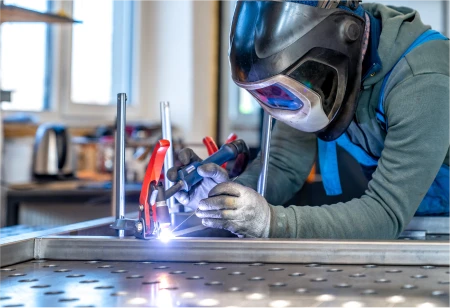
Differences in Skill Sets
Welding and fabrication also require different types of expertise.
- Welders specialize in joining metals and ensuring strong, clean welds
- Fabricators oversee the entire production process, often working across multiple stages
Differences in Application
Welding and fabrication are used together, but they are applied differently:
- Welding is used when permanent metal joints are required
- Fabrication is used when building complete parts, structures, or assemblies
How Welding Fits Into the Fabrication Process
Welding is not separate from fabrication—it is a critical step within the overall fabrication process. While fabrication includes multiple stages such as cutting, bending, and assembling, welding is the point where individual metal components are permanently joined together to create a complete structure.
Where Welding Happens in the Workflow
- Design and planning
- Cutting raw materials
- Forming and shaping metal
- Welding components together
- Finishing and quality control
Why Welding Is So Important in Fabrication
- It ensures structural strength and durability
- It allows for the creation of complex assemblies and weldments
- It directly impacts fit, alignment, and performance
- It contributes to the overall longevity of the product
The Advantage of Integrated Fabrication and Welding
- Better process control and consistency
- Faster production timelines and turnaround
- Reduced risk of misalignment or rework
- Improved overall product quality
Tools and Equipment Used in Welding and Fabrication
Common Welding Tools and Equipment
- Welding machines (MIG, TIG, and arc welders)
- Gas supply systems for shielding and heat control
- Electrodes and filler materials
- Protective gear to handle heat, sparks, and fumes
Common Fabrication Tools and Equipment
- Laser cutting machines
- Press brakes
- Turret punches
- Machining equipment
- Sawing tools
- Assembly and finishing tools
When Do You Need Welding vs Fabrication
When You Need Welding
- Connecting metal components
- Reinforcing or repairing parts
- Creating strong joints
When You Need Fabrication
- Creating complete parts from raw materials
- Multi-step production processes
- Custom designs
When You Need Both
- Complex assemblies
- Production runs
- Multi-part builds
Choosing the Right Partner for Welding and Fabrication
What to Look for in a Welding and Fabrication Partner
- Experience with complex weldments
- Certifications and standards
- In-house capabilities
- Consistency
- Collaboration
Why Companies Choose LMI for Welding and Fabrication
At LMI, welding and fabrication are not treated as separate services. They are integrated into a streamlined, in-house process designed to deliver consistent, high-quality results.
With over 60 years of experience, our team brings deep expertise in handling:
- Complex weldments
- Multi-part assemblies
- Mid- to high-volume production runs
Our welding capabilities are a core strength, supported by a large bench of skilled welders and advanced equipment, including robotic welding systems for improved consistency and repeatability.
We are AWS-qualified and equipped to handle welds up to one inch thick, giving us the capability to meet demanding structural and performance requirements.
Our facility combines:
- Laser cutting
- Forming
- Machining
- Welding
- Assembly
All under one roof—allowing us to reduce lead times, control quality, and deliver cost-effective solutions.
Beyond production, we work closely with our customers to:
- Refine designs
- Solve challenges
- Improve manufacturability
Helping you get better results from the start.
Can You Fabricate Without Welding?
Yes, it is possible to fabricate metal without welding—but it depends on the design and requirements of the final product.
When Fabrication Doesn’t Require Welding
- Mechanical fasteners
- Interlocking parts
- Adhesive bonding
- Single-piece designs
When Welding Becomes Necessary
- Structural strength
- Permanent joints
- Complex assemblies
Industries That Use Welding and Fabrication
- Manufacturing
- Electrical
- Material handling
- Construction
Why Quality Matters in Welding and Fabrication
- Structural integrity
- Precision
- Consistency
- Performance
Frequently Asked Questions About Welding and Fabrication
Is welding the same as fabrication?
No, welding and fabrication are not the same. Welding is a specific process used to join metal parts together, while fabrication is a broader process that includes cutting, bending, forming, assembling, and often welding. In most cases, welding is just one step within the overall fabrication process.
What is the main difference between welding and fabrication?
The main difference is scope. Welding focuses on joining metal components, while fabrication involves the entire process of creating a finished product from raw materials. Fabrication includes multiple steps, with welding being one of them.
What are the most common types of welding?
The most common welding processes include:
- MIG welding (Metal Inert Gas)
- TIG welding (Tungsten Inert Gas)
- Arc welding
- Gas welding
Each method is used for different materials, thicknesses, and applications, depending on the project requirements.
Can fabrication be done without welding?
Yes, fabrication can sometimes be done without welding. In certain designs, parts can be assembled using bolts, rivets, or other fastening methods. However, welding is often required when strength, durability, and permanent joints are needed.
Which is better: welding or fabrication?
Neither is better—they serve different purposes. Welding is ideal for joining metal parts, while fabrication is necessary when creating complete components or assemblies. Most projects require both processes working together.
What industries use welding and fabrication?
Welding and fabrication are used across many industries, including:
- Manufacturing and industrial equipment
- Electrical and power systems
- Material handling and logistics
- Construction and structural applications
These processes are essential wherever durable, precision-built metal components are required.
Choosing the Right Approach for Your Project
Understanding the difference between welding and fabrication helps you make smarter decisions when planning and executing metal projects. While welding focuses on joining components, fabrication brings every step together to create a complete, high-quality product. In most cases, the best results come from combining both processes with the right expertise behind them.
By working with an experienced partner who understands how these processes connect, you can improve efficiency, reduce costs, and ensure long-term performance. Whether your project requires simple welds or complex, multi-stage fabrication, having the right team in place makes all the difference.
Partner with LMI for Welding and Fabrication
If your project requires reliable welding, precision fabrication, or a partner who can handle both seamlessly, LMI is built to support you.
With decades of experience, AWS-qualified welding capabilities, and fully integrated in-house services, we help manufacturers and industrial teams streamline production, reduce lead times, and improve overall product quality. Whether you’re developing a new assembly, scaling production, or solving a complex fabrication challenge, our team works alongside you to deliver practical, cost-effective solutions.
Reach out to LMI today to discuss your project and see how a true fabrication partner can make a difference.